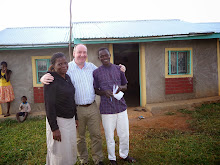
There are some words and phrases that Moses uses
occasionally, that I know, from my years of experience of travelling with him
in around the busy roads of Nyanza and Western Provinces, do not mean exactly
what they appear to say.
So when he turned the car onto a dusty mud road, some miles
before the busy town of Bungoma, and announced “This is a short-cut”, I have to
say my suspicions were aroused.
We had been travelling back from Malaba, a border town in
the very western part of Kenya, grid-locked with lorries, laden with goods they
had collected at the port of Mombasa and then driven across Kenya, bound for
Uganda. Huge wagons, nose to tail, queued for miles to reach the border post, to
have their papers checked and their trailers weighed, before being allowed to
roll through the Ugandan hills towards Kampala, some two hours away.
“Will it be bumpy?” I enquired, preferring my own comfort to
any potential time saving. “No”, Moses replied, “It will just be smooth, apart
from one small bit by the bridge”.
That should have been warning enough.

It was a far cry from the peace of Noah’s rural home. We had
gone to Malaba to visit him and his family. Noah had been with the Trust for a
number of years, living at Kibos with Moses and Tatu. He went to school, but
then chose an apprenticeship in car mechanics, which we were able to fund for
him. He spent two years in Bungoma, the nearest large town, learning his trade
in an established garage, before graduating.
He was a quiet boy, who has matured into a lovely natured
man. Now 25 he lives an independent life, has got married to the beautiful
Jocelyn, a teacher in a nearby primary school. They have a 7 month old son,
Brian – another lovely grandson for the Trust.

We met Noah in Malaba town, amongst the high sided wagons
and trailers. He guided us through a maze of back streets and onto ever smaller
rural roads and footpaths (footpaths in Kenya become roads if someone has a
mind to take a car down them – and Moses has such a mind).
We walked the last few hundred yards to the compound,
through fields planted with maize and cassava. The unmistakeable smell of wild
mint rises from the small purple flowered plants that grow at the field edges,
carried on a cooling gentle breeze from the Ugandan hills a couple of
miles to the west. The fields were planted a month or so earlier and the maize
has pushed its tender, green head above the deep red earth in time for the
early rains.
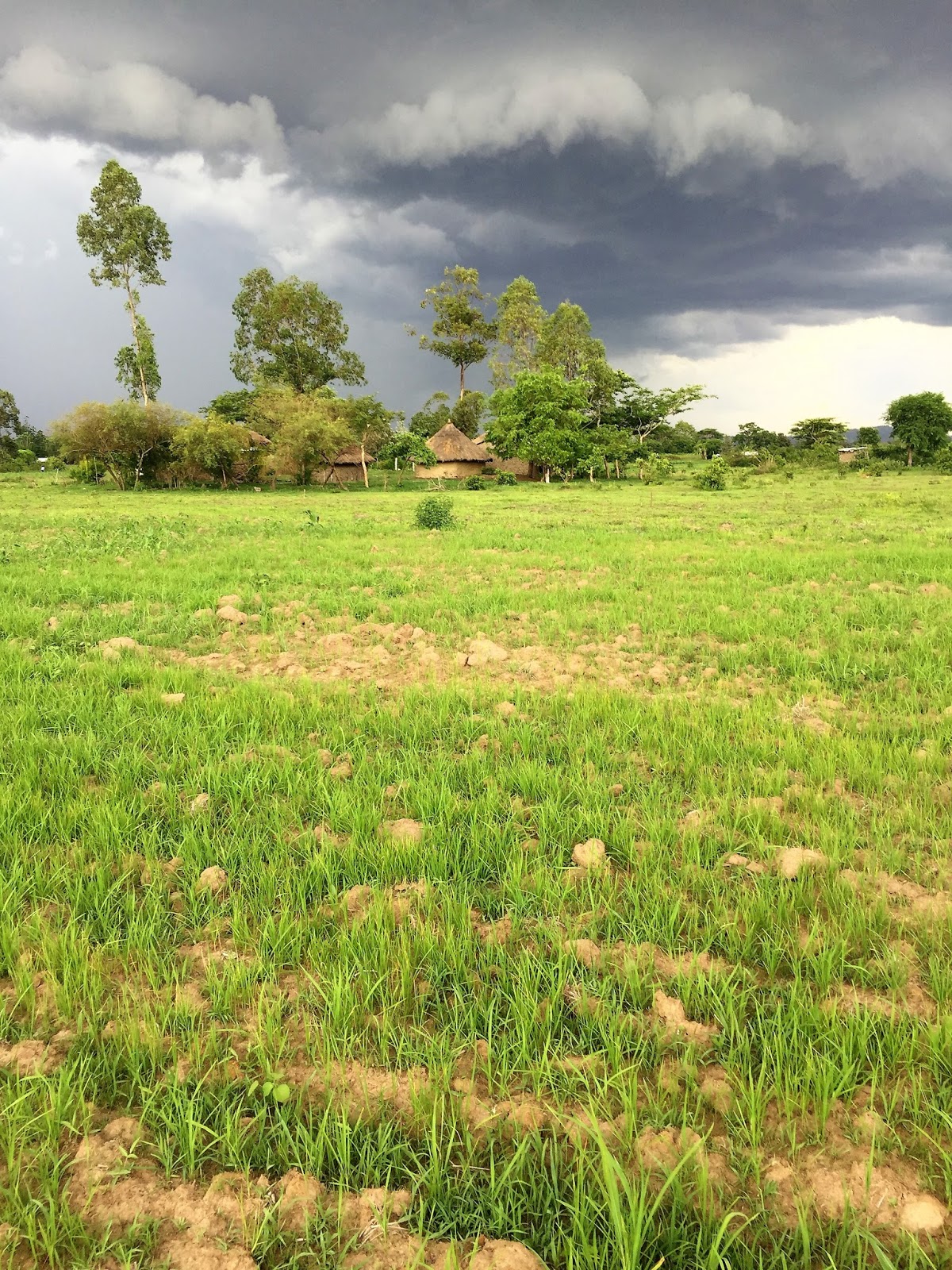
“It gets very wet here”, said Noah, as he led us around the
field edge towards his home. “We have some rice growing in these fields”. He
gestured to his right at what looked like an acre or so of spindly grass which
I had assumed was for grazing the families cattle. On closer inspection it
became clear that the small, thin green leaves had been placed a few inches
apart in neat rows and were growing well. “When the rains come,” Noah continued, “this whole
are can be under water. The rice can do well”.
As we entered the compound Noah’s mum rushed to meet us,
shaking our hands and thanking us for coming, clearly delighted that we were
there.
Noah’s reunion with his mum, some years earlier, was one of the most moving moments in Moses experience.
Believing Noah to be dead and thinking she would never see him again, we took Noah back to his family soon after he came to Kibos after a few years on the streets of Kisumu. She broke down in deep tears of joy to see her son again and is so grateful for all that has been done for him.
Noah’s reunion with his mum, some years earlier, was one of the most moving moments in Moses experience.
Believing Noah to be dead and thinking she would never see him again, we took Noah back to his family soon after he came to Kibos after a few years on the streets of Kisumu. She broke down in deep tears of joy to see her son again and is so grateful for all that has been done for him.
Noah, for his part, has matured into a lovely, independent
young man with his life ahead of him and his family. Not for the first time this week I felt
very proud of what God has done through the people working for the Trust here
in Kenya.
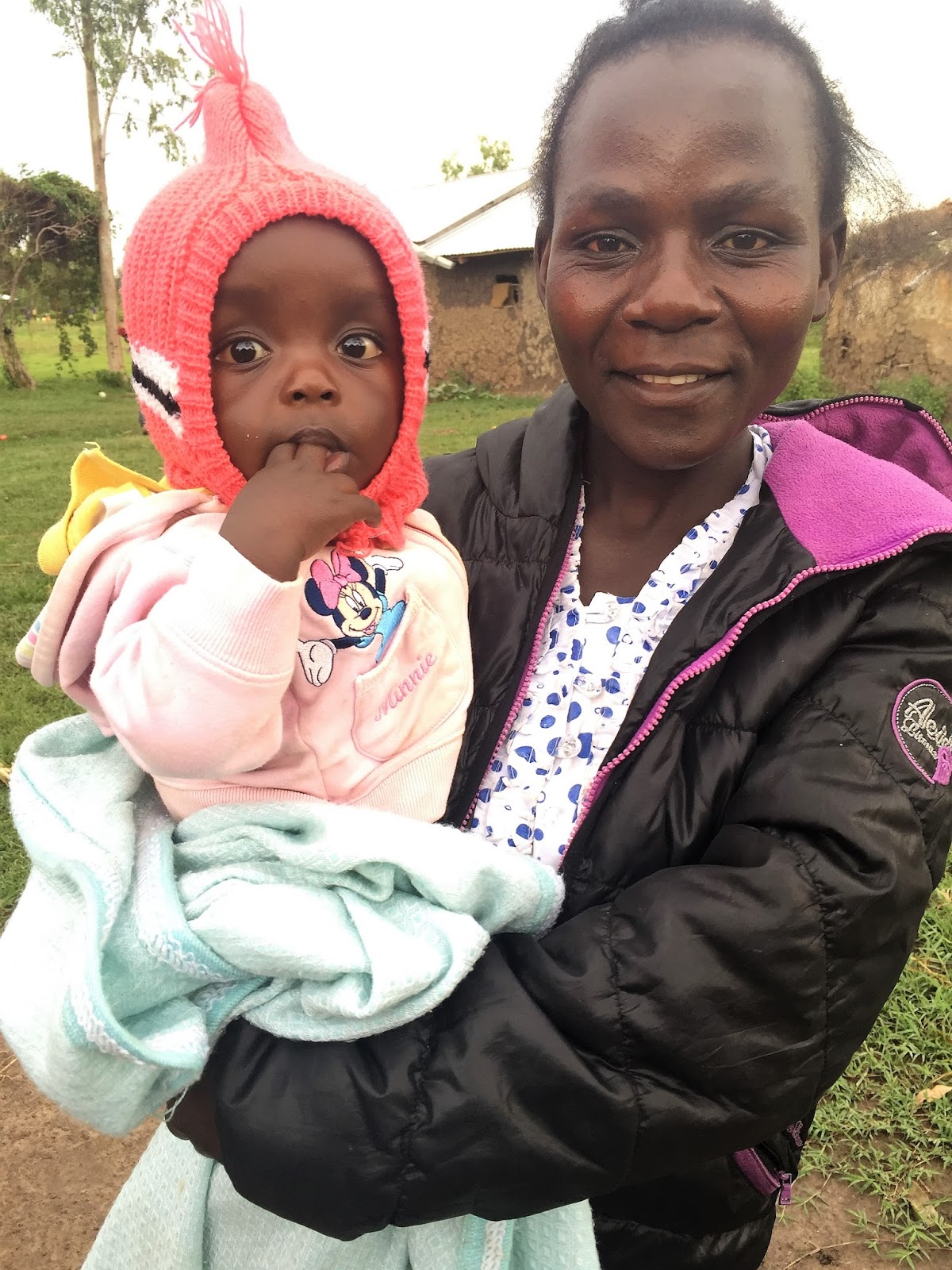
We were soon joined by Jocelyn, returning from school, with
baby Brian on her back, wrapped in blankets and with a bobble hat to keep out
the cool of the breeze.
We talked and drank sodas under the cool of a mango tree in the corner of the compound, maize fields stretched out behind us and iridescent blue sunbirds jumping between the branches, seeking out the fresh fruits and flowers. Smoke rose from a small charcoal stove behind a traditional hut on the other side of the compound where Noah’s mum was preparing fresh Ugali and Chicken for her visitors.
We talked and drank sodas under the cool of a mango tree in the corner of the compound, maize fields stretched out behind us and iridescent blue sunbirds jumping between the branches, seeking out the fresh fruits and flowers. Smoke rose from a small charcoal stove behind a traditional hut on the other side of the compound where Noah’s mum was preparing fresh Ugali and Chicken for her visitors.
“We should go inside” said Maurice, Noah’s uncle who had
joined us from his place on the other side of the road (footpath), “there is
rain coming”.
He picked up the table and chairs and carried it into one of the small, traditional mud and thatch huts that make up the homes in the compound. Inside it was cool and dark, my eyes taking some time to adjust from the brightness of the afternoon sun.
Then, from outside, lightning and thunder, a strong wind
blew up and the rain began to fall. I say fall, it, quite literally, pounded
the earth until every blade of grass was crying for mercy, running like a river
from the cut ends of the grassy thatched roof of the hut. It felt quite
appropriate to be in Noah’s place at the time of a big storm!
After twenty minutes or so it stopped as suddenley as it had begun, the sun came out
again and the earth began to gently steam.

We ate our food gratefully, then talked with Noah, with
Jocelyn and with his family.
Noah is of age now and has his own parcel of land which he has planted and maintained. It is enough for him to feed his family, but he would like to continue with his mechanics. We would like to buy him a toolbox, with which he will be able to attach himself to a garage in Malaba and which, ultimately, will enable him to work for himself.
Jocelyn is praying to be absorbed into the Kenyan teaching system, though this process can take many years until she had an official post.
Noah is of age now and has his own parcel of land which he has planted and maintained. It is enough for him to feed his family, but he would like to continue with his mechanics. We would like to buy him a toolbox, with which he will be able to attach himself to a garage in Malaba and which, ultimately, will enable him to work for himself.
Jocelyn is praying to be absorbed into the Kenyan teaching system, though this process can take many years until she had an official post.
As we left, Noah came to me with a chicken as a gift of
thanks, at which the family burst into laughing and clapping. We took our final
photos as the sun began to fall in the sky, before heading back to the small Toyota
for the three hour journey back to Kisumu.
“It’s ok”, said Moses, “this way will be quicker. I know it,
it goes past my home”.
We sped down the dirt road, made red from the afternoon
storm, throwing a cloud of dust over a group of schoolchildren on their way
home from a busy day, their blue and yellow uniforms now showered in iron rich
soil.

Then Moses slowed and stopped the car at the top of a steep and rocky incline that led down to a small stream, over which someone appeared to have lost a load of wood from the back of a boda boda.
“What is that?” I said to him
“That’s the bridge”, said Moses, somewhat stating the
obvious.
On the road below us was a precarious structure, a few thick
logs covered with, what looked like a few lengths of 4x4. It was clearly aimed
at bicycles and pedestrians, but its ability to support a vehicle convinced me
considerably less.
“Shall I get out?” I said to Moses, thinking it might help
to lessen the weight of the vehicle.
“No”, he replied quickly, “We go over together!”
We arrived back in Kisumu at 9:30, it had been a long day.
For some of our children, Noah included, life has confronted them with a number
of “rickety bridges” – challenges they need to be brave and courageous to
overcome.
For some, like Noah, we have been able to cross them
together.