Sunday, 1 December 2013

Food from the Wilderness - Fresh Manna and Quails


Sunday dawned hot and sultry, but I woke excited. I always do when it is time for church.

And today we had two churches planned.

Fresh Manna is our church in Kibos, established on our land it is a community church serving the surrounding village. It has a committed, core congregation and worshipping and preaching there is always a joy. I look out on a sea of familiar faces – my second church family.

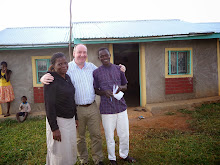
But today I went, for the first time, to a new church that we have established by the rubbish dump at Kachok – and it is, quite literally, by the rubbish dump. In a small, sparkling new building of bright Mbati sheets sat a small gathering of young and old.

Moses got out his guitar and we began to sing familiar Swahili worship songs. I have picked up the words for some, but occasionally Moses will throw in a new one, and then I am lost, trying to catch a phrase I recognise.

As the praise rang out over the rubbish dump, so more and more people came to join. Faces I knew from the Tuesday and Friday fellowships, men who have been coming for years, children who have found hope in their education, and new faces, men and women from the community round about.

As I looked out of the small shiny window over the spoils of rubbish, piled in large heaps a few yards from the church door, I felt quite moved. As we sang, tears rolled down my cheeks, touched by God’s goodness and grace.


I preached a simple gospel message of love, hope and redemption, of a God who doesn’t discriminate against those that society would look down on, who loves the unloved and seeks the lost. At the end, more than 20 hands were raised in surrender to God and we prayed for an outpouring if His Spirit in that place.

I left exhausted and moved, greeting everyone I could manage, before Moses whisked us away to Kibos, and our second church of the day. At home, sometimes, in Burnley Methodist Circuit (with apologies to all Pentecostals, Anglicans and Catholics out there) we are planned for two services in a morning, at 9:30 and again at 11:00, and, apart from the praise and worship, the call to salvation, the loud cries of intercession and the wonderful African dancing (how do they all have such an amazing sense of rhythm?) it is very similar.

I feel at home in Kibos church, as I said, they are my family. After the service the greetings were warm and friendly.

We adjourned to the house and rehabilitation centre we run in Kibos, the first stop for boys from the street. Moses, and his wife Tatu, run the house and rushed off to change and begin preparing lunch.

I love my Sunday lunches at Kibos, there is a beautiful garden filled with vegetables and at the back of the house Moses has an ever growing smallholding, packed with geese, chickens, pigeons and, on this occasion, a small wicker basket of quails.

“Lunch”, he proclaimed, with a broad smile on his face.

I went to sit in the living room with one or two of the boys, whilst Moses, Tatu, Florence and Sheila began to cook.

I talked with Moses Peace, one of the first intake of boys from 2003. Moses came to us when he was 12, after meeting us in the street programmes in Kondele. He has had a chequered past, struggling at school and going backwards and forwards between different programs, but finally he is settled.

He told me that he is training in Electrical Engineering. He has been doing it since March and really enjoys it. To demonstrate his skills he dismantled one of the amplifiers from the church on the table in the living room “Moses will argue with me if he knows” he grinned.

He pointed at the different components. ”I can make this” he said, pointing at a circuit board, “but this one I am still far” he added, pointing at another that looked almost identical.

“I really want to appreciate what has been done for me” he said. “I know I haven’t always been great and I know that I dropped in and out of school, but I am grateful. When I think of where I was and how far I have come, I can only say thank you”

We rent a small room for Moses, whilst he is training. He will take another year to qualify, but he clearly loves it. He tells me that he cycled to church this morning from his aunts. I ask how far that is, “about 45km” he said, “I set off at six and was here by 8:30”.

“If you have others who want to train”, he says, “bring them to me and I will train for nothing. It is the least I can do to appreciate what has been given to me”

My day began by the rubbish dump and ended with hope fulfilled.

We ate quails and rice, with Moses homemade chilli and marmalade relish, and it couldn’t have tasted sweeter.

Saturday, 30 November 2013

Hotel Furaha


There was a beautiful sunset last night.

One of the best things about the clear hot days is the red sky as the sun slows sinks into the watery horizon. The African Fish Eagle, perched on the bare branches of the tree on the lake shore watches on. He has feasted this evening on nile perch, freshly plucked from the waters of the Lake. The familiar black kites circle overhead and the low grunting of hippo’s fills the air with their resonant bass.

It’s beautiful to sit and watch. The sun sets so quickly. Just a minute after it touches the horizon it is gone, leaving nothing but a red glow in the sky.

We have had a good day, taking the children to eat fish in the shacks by the side of the Lake. I always enjoy times like this. It is a chance to talk with the children and to spend a little bit of time with them. The shacks are full of families, enjoying their Saturday afternoon lunch and we feel like a family too. The boys are smartly dressed in brand new football tops, donated by kitbag.com, one of the companies in the group that I work for. The tops are from the wide variety of clubs that kitbag work with and carry the names of those clubs top players. The children were delighted with them and debated with each other earnestly who would be Juan Mata and who would be Mesut Ozil.

We ate at Hotel Furaha (it means laughter or happiness), dining on freshly caught tilapia, stewed in tomato and served with the ubiquitous ugali (maize porridge). Dining here does not stand on ceremony, there are no knives or forks. The etiquette is to tear off a small piece of ugali, roll it between your fingers and then make a small depression with the thumb. Using this ugali, scoop up the sauce, whilst prizing the white flesh of the fish from its long bones.
 

To be honest, the African Fish Eagle, with its purpose made implements, may well do a better job than I do. But the children are experts. I watch on as they dissect the fish with expert fingers and eat until they are full.

Many of the children are away at the moment. Now that the school year is done they visit relatives or go to their homes. This is a key part of the Trust’s home reintegration strategy. The children will stay with us for a period of time, becoming accustomed to life away from the streets, but the end goal is for them to return to their home and community. It is how they will ultimately become independent.

So today there were 20 of us, full of fish and happy to have been well fed. Those that weren’t are, perhaps, taking the first steps in learning to fish for themselves.

As the sun set, so the fishermen set out for the night. It is too hot for the fish during the day and they are around only during the night or in the cool of the early morning. I watched the sky move from red to black and a million stars emerged above Africa.

And the hippos rumbled on.

A World at their Feet


The small Toyota climbed the steep hill out of Kisumu in first gear, straining under the heat of the afternoon sun.

It’s hot in Kisumu at this time of year, the rains have all but finished and the long dry season has begun. Rains wont return in any quantity until March or April and the air is growing dusty with expectation.

We turn off the tarmac onto a bumpy, stony track, winding around the hillside to the left. We pass small homesteads, perched precariously on narrow strips of land, where chickens run around excitedly and dogs bark at the car.
Then we pull in, in front of a mud and thatch hut, adorned with an iron sheet roof.

Mary comes out to greet us, closely followed by Atenas.

I get out of the car to warm greetings and smiling faces. I wanted to visit some of the children that we support whilst they are at their homes. School finished last week and the children are visiting relatives and making the most of their time.

Mary and Atenas are brother and sister. Mary has just completed Form 2 (her second year of secondary school), whilst Atenas has just graduated Form 4 (the final year) and has taken his KCSE (Kenya Certificate of Secondary Education). For Atenas, his marks will be everything. Anything above a B- and university will beckon. He is happy and confident – he has been an excellent pupil throughout his education and a real blessing to the Trust.

We first came across Mary and Atenas at St Pauls Primary, near to Mamboleo. Our social worker, John, was asked if there was anything that could be done for them by the headteacher. She said they were bright and gifted children in school, but she was worried.

Their mother and their father both passed away whilst they were in primary school and they were left in the care of their elderly maternal grandmother. She struggled to cope and their school performance suffered as they tried to find food for the family.

The Trust stepped in and began supporting them and their home. They have never come into our rehabilitation centres, but have managed to stay at home because of the support they have received.

And that support has been hugely rewarded.

As we sat in the small, dimly lit hut, I talked with Mary about her school. Her report card is excellent and she has just finished Form 2 ranked second in the whole year for performance. She loves science and would like to be an accountant. Or a Neuro Surgeon. Or something like that. I am sure that university beckons for her. She is a bright and articulate young woman and it is wonderful to see her progress from the shy and sad girl we first met. She tells me that she loves to swim and I ask her about her friends. “I have some”, she says, “but I am serious about my studies and they can be distracting”.

Life for a young woman in Kenya is not easy. Prejudices can limit opportunities and girls aspirations are often tempered accordingly. But in Mary I met someone that I believe will make of life all that she can.

As we left the hut I noticed for the first time the amazing view.

The hut overlooked Kisumu and the vast expanse of Lake Victoria, shimmered in the afternoon sun.

Mary explained that each morning they have to walk down to Mamboleo hundreds of metres below to fetch drinking water and then walk back. I asked how she carried the big jerricans. “On my head” she replied, as if it were the most natural thing in the world.

During the rainy season they collect the water and have plenty to drink, but when it is dry it’s a daily walk down the steep slopes of the Mamboleo hills and back before you can quench your thirst. At the moment, and for the next three months, it is dry season.

It seems such a contrast, that poverty and lack of opportunity could co-exist with such breathtaking beauty. Standing here is like seeing the world at your feet.

And that is my prayer for Mary and Atenas.

Friday, 29 November 2013

Rebuilders of Broken Walls


I wondered down to the front of the hotel, hoping that the taxi had arrived and was waiting to carry me back, through the dusty, noisy Nairobi traffic to what remains of Jomo Kenyatta International Airport.


The airport was largely destroyed by fire and facilities can only be described as temporary. 

Where the arrivals hall once stood there is now nothing but plans for rebuilding. I sailed through arrivals last night, my visa stamped and my passport checked within half an hour of getting off the plane. A temporary arrivals hall and baggage collection facility has been created in a hangar and it worked beautifully last night.


Out of the ashes of the airport, with its bustling shops and long queues is the possibility to make it new. And that’s exciting.


Wycliffe, my taxi driver, had indeed arrived on time. It is always a relief to see a smiling face whisk my bags into the boot and jump efficiently into the driving seat of a newly washed car.


We talked on the way to the airport.


He is from Migori, south of Kisumu, but came to Nairobi looking for work. His parents couldn’t afford for him to go to High School, though it remained his dream.

When he arrived in Nairobi he took some menial jobs and saved some small funds until he was able to take a driving course, after which he began to be employed by one of the many airport taxi companies who ply their trade between the airport and the city hotels.

In between driving, Wycliffe studied. Part time, at home, after a long shift, he got out his books and began his learning.


This year, he told me, he has taken his KCSE secondary school exams.

He is hoping for a C+, or perhaps even a B-. Either would qualify him to join a college course.

I hope and pray that he gets his grades, I hope and pray that he finds a college course to accept him.


He told me that in church on Sunday they talked about Nehemiah, that God would reward those who do good work. I said that Nehemiah rebuilt the broken walls of a city, but that with many hands. People came together to build, craftsmen, artisans, labourers and priests,  each man standing and building the piece that was in front of them. It was hard work, but slowly by slowly the whole city came together. W talked about education, that for many it is a wall that is broken, a dream in ruins. But some don’t give up. If each man and woman in the city began to rebuild their own piece of that wall, with his commitment and dedication, then Kenya would be a different country. Surely that would be a reward.


He dropped me off at the domestic terminal and I walked in, to check in for the short flight to Kisumu.


Inside stood 6 new automated touch screen check in kiosks, one of which effectively and efficiently printed and presented me with a boarding card. The large South African gentleman stood next to me was as surprised as I was. 

“Good God”, he exclaimed, “it worked!”


It is easy to make a judgement on a place based on past experiences, but for Wycliffe, for the many children in our care that I am hoping to visit over the next few days, perhaps it’s a case of simply looking at what is broken in front of us, and starting to rebuild, brick by brick, child by child, man and woman by man and woman. And when you start to look, you see the shoots all around.


I arrived in Kisumu this afternoon and sat with Moses and Paul James on the hotel terrace, enjoying a cup of tea in the afternoon sun and the easy conversation that comes from meeting up with old and trusted friends.  We planned out the few days ahead, visiting children, going to the outreach and following up on the apprentices I visited on my last trip.


I hope to see more new shoots, springs of water in desert places, hope in the streets of this city.


“And you will be called the rebuilders of broken walls” – Isaiah 58:12

The Only Ice Rink in East Africa


“Did you know”, said Stephen, the taxi driver taking me from Nairobi International airport to my hotel, “That there is a hotel in Nairobi with an ice rink?”


I didn’t!


“It’s the only one in the whole of East Africa” he added.


To be honest, it would have been more amazing to me if there had been another.

 
I wondered who uses it, if indeed anyone does. 

The hotel in question faces onto Nairobi National Park, where, in exchange for a small fortune in dollar bills a tourist can watch giraffe, zebra, baboon, buffalo, wildebeest and more. Thousands of people fly in to Nairobi from all over the world hoping to catch a glimpse of the natural beauty and wildlife of this remarkable country, whether it’s the great migrations through the Masai Mara, the great rift valley lakes, made pink by flamingo’s or the elephants wondering freely in the foothills of Kilimanjaro.


One of the great pleasures of this continent is to sit and listen, to hear the sounds of the African night, knowing that, in what looks like deserted wilderness the great circle of life plays out.


I’m not sure that an ice rink is what they are really looking for.


When I left home this morning it was 3 degrees C. When I arrived in Nairobi, at 9:30 in the evening, it was 23 degrees c.


The very last place that I am going to go to is an ice rink!


I asked John, the hotel porter, what he thought, as he carried my bag to the room when I had checked in.

“We are proud” he said, “it is the only one in East Africa”.


So maybe it is the new, prosperous residents, business men and women and their young families, who have grown up with the wildlife on their doorstep, looking for new experiences, looking for fun who go there on a lazy afternoon.


Not far from the hotel in the opposite direction, towards the city centre, lie the great slums of Nairobi. Men, women and children live out their lives in desperate need, surviving below the poverty line day in, day out. I have been to the Nairobi slums on two or three occasions over the last ten years and those in Kisumu much more frequently. The difference between the two ways of life is as vast as the 4,500 mile journey from Manchester to Kenya and it seems so hard to change anything.


I sat in the hotel bar this evening, with an ice cold Tusker in one hand and the Champions league on the big screens in front of me.


And I tried my very best, given the confines of the hotel wifi, to facetime with Pam.


And I feel so very, very fortunate. Lucky to have the family, the friends, the colleagues, the work and the home that I have.


And the opportunity to choose whether to not to go to the only ice rink in East Africa.