Showing posts with label Banana. Show all posts

Saturday, 25 March 2017

Planting Seeds


It is my last morning in Kisumu for this trip. It has been brief, but full and I have loved seeing how our children have matured into lovely young men and women, as well as meeting new children who joined our family since I was last here.

As the lift was still not working, I carried my bag down the 10 flights of stairs (76 steps) that reach up to the 3rd floor of the hotel. Each step crunched underfoot.

You see, the rains have brought out the bugs and, each morning before the cleaners have made it round with their bucketful’s of water and their wide sweeping brooms, the passageways crunch with the shells of beetles and flying things, lying, mostly, dead on the floor. I mention this only in case you are ever tempted to come with the Trust to Kenya one time. 

You would be welcome in the rainy season, but you should know that there are bugs.

Each night I have crawled under a mosquito net and laid down to sleep, listening to the incessant buzzing of the tiny insects looking for a tasty vein or two. Apparently it is only the females that bite, the males preferring nectar to blood. Make of that what you will – though I will confess that I am on the nectar side of that choice!

Female mosquitos are particularly adept at feeding, they are able to sense human breath and to know, from subtle differences in temperature on the skin, which veins are nearer the surface and where they will best drink their fill. How I wish my local surgery had similar technology, for when they need a small sample of my blood!

It is strangely cosy under a mosquito net which, despite the nearby buzzing, gives a sense of comfort and protection – a bit like listening to the rain pouring down outside a window, whilst inside the fire is on and a cup of hot tea steams.

I had, therefore, slept well last night and woke refreshed for the day. I had a hot cup of Kenyan tea in the dining room, then packed my things up for the day.

Moses and I had planned a morning in Kibos, I wanted to walk around the couple of acres of land we own there, look over the gardens and the vegetables that will supply our food over the coming months.

Daniel at KBS
On our way we called in to KBS, the Kenya Bureau of Standards, located in a lovely large compound on the Kibos Road from town.

Daniel, who is at Moi University and who I had met on Sunday at Kachok, is doing a short internship at KBS, furthering his studies before returning to college next month. 

He is really enjoying his time there, though he tells me that he would love to return to KEMRI (Kenya Medical Research Institute), which is located by the lake shore on the road to Maseno. He spent a few months there earlier in the year which he really enjoyed.

“I need to get good grades” he said, “I know I have to work hard”. He is currently forecast a 2nd Upper Degree in Biochemistry.

I so hope that he makes it.

We left the calm of KBS for the busy dust road to Kibos.

“What is this?” said Moses, looking ahead to where a large plume of dust rose from the road. It is usually fairly bad around here as Matatus speed up and down the road, avoiding the bumps and potholes, throwing up a wave of red mist in their wake, but this morning it was much worse than usual.

“This wasn’t here when I left” he said.

As we edged closer, all became clear.

“Aaahh”, said Moses, nodding sagely, “It is election season”.

If that was meant to help me to know what was happening, then I am afraid I failed the comprehension test.

A huge yellow mechanical thing, a cross between a JCB, a plough, a snow plough and a roller was plying the route, first churning up the road with the spikes of the plough before returning with the smooth snowplough / roller to remake the road in a smoother image.

In early August Kenyan’s will go to the polls to elect their President. On a more local level, there will also be elections for the County Governor, for the local senate and the assembly.

It is at election time that many roads get fixed, so the good job of the Governor will be remembered by the people.

Today it was the turn of Kibos.

Gerald by the Garden
Impatient casualties of the road-mending lay stranded in the large piles of earth thrown up by the machine. Matatu’s that couldn’t be bothered to wait until the JCB plough / roller thingy returned to smooth the mud had tried to force their own way through, only to become grounded in the middle of the road.

We waited, and followed the road the kilometre or so to Kibos, then on to our place.

A few weeks ago the land was ploughed and Gerald planted it with Maize and Sorghum in time for the rains to come. The green shoots are now starting to push their heads into the sunlight and the first weeding has got underway. Kunde and Sikumawike grow, interspersed with the Sorghum and a further plot has been planted with cassava. 

A Papaya tree
Half a dozen Papaya trees grow on the edge of the vegetable patch, offering a little shade and the prospect of some tasty fruit. The banana trees, which died off after last year’s harvest have now started to produce fresh shoots and Gerald is planning to split them and plant the around the plot once more.

Gerald has come to work for us over the last year or so. Originally from Busia, he now lives at Kibos, taking care of some of the older boys. I was delighted to meet him this week and know that we will work well together over the coming years.

Soon it was time to leave, to head off to the airport for my final hop back to Nairobi and the overnight flight back to Paris and then Manchester.


We sped back over the new Chinese built flyover to the newly surfaced Busia / Airport Road. 

Kisumu has changed a lot in the years that we have been coming, it has grown and modernised, new industries have come and land prices are soaring. The sugar cane factory in Kibos is booming, taking harvests away from the traditional plants at Mumias. In the next couple of years a new, Chinese built, standard gauge railway will connect with Nairobi, where a link will open in a month or two all the way to Mombasa and the ports.

But for all of the infrastructure, for all of the apparent progress, there are still many children in desparate need. 

For every Daniel, succeeding at university, there are a dozen Wayne’s, not knowing who can help them, without a hope in their lives.

My experience is that the children don’t need a hand out, they need a seed planting. Like the maize and the sorghum planted in the gardens at Kibos, if they can find a little help, protection and water when things get hot, then they can become the most mighty and wonderful plantings of hope.

Thank you for reading my blog through this week, I hope I have managed to share something of the Isaiah Trust family, of my brothers and sisters, children and grandchildren in hope.  

Please feel free to give the trust a “follow” on Facebook and, for our part, we will try our best to give you regular updates from Kenya.

www.facebook.com/IsaiahTrust

Thursday, 30 October 2014

Transformations


We have just said our goodbyes to a wonderful group from Ackworth Boys Brigade and their safari bus, bursting with bags, smiling faces and waving arms has just headed off on the dusty road outside St Anna’s Guest House on the long drive to Narok, just north of the Masai Mara. Over the next day or so they will see more of this beautiful country and hopefully enjoy some of its world famous wildlife.

The short safari is a well deserved end to their trip to Kisumu, where they came to help the work of the Trust in a very practical way.

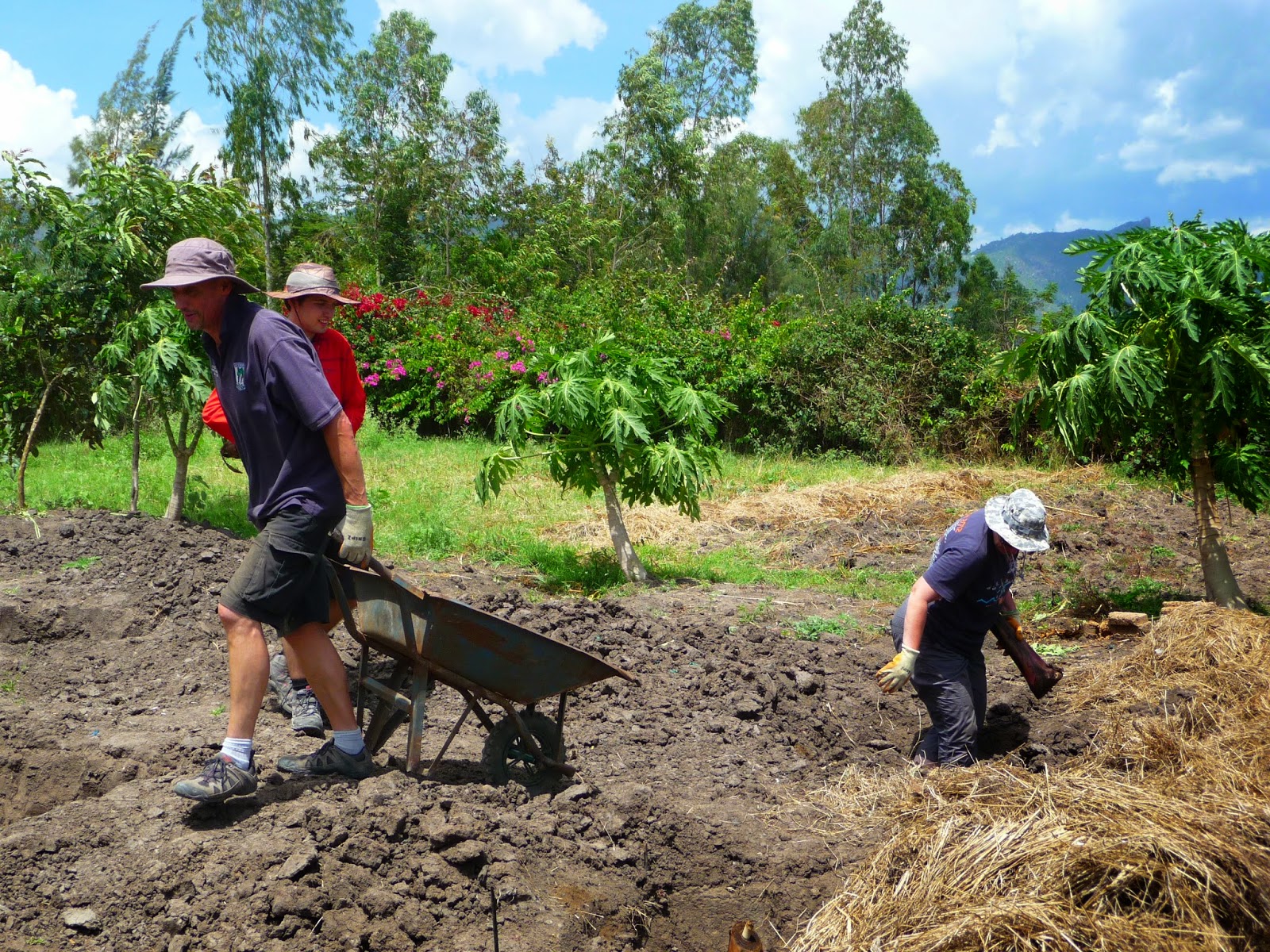
Our small parcel of land in Kibos, on the outskirts of Kisumu, has been transformed over the past week, by the addition of two 5,000 litre water tanks sited next to our pump, a large greenhouse, a tin house that will serve as sleeping quarters for some of the older boys we look after and the foundations of a banana plantation.

They will leave Kenya with plenty of photographs of its rich wildlife, but they will leave behind something of great value, that will allow our land to prosper, where vegetable can grow all year, not just in the rainy season, irrigated by drip pipes fed from the large water tanks and banana’s that will provide shade, food and income for the Trust.

In ten years time their pictures will be distant memories, but the legacy of the work will continue.
It never ceases to amaze me what determined people can help to achieve. This isn’t a country that lacks ideas, but one that lacks the capital to make a difference.

Over the last few days the group have had emotional highs and lows, challenging their perceptions of what some practical aid can do amongst some of the poorest people they have met. 

Everywhere they have gone they have been warmly welcomed, whether it was our house at Kibos or the church by the rubbish dump in Kachok.

The thing that always comes through strongest for me in the most challenging places is the faith of the people who live there. They have so very little, that their faith cannot just be reserved for Sundays. It is something they live out every moment of every day.

Even more than the legacy that has been left on our land, the group have each formed friendships with the boys at our house and with the people of Kachok.

Accompanying groups of open minded people to the work of the Trust is a great pleasure and this trip has seen great investment and transformation of our land. I think it might also have transformed the hearts and minds of those who have come.
I hope they come again.

Wednesday, 29 October 2014

I will just be half an hour


“I’m just going to Kondele to get a door made” said Moses, in the sort of matter of fact way that these things happen in Kenya, “I will be back in 30 minutes”.
I am not skilled in the art of door making, but I hazarded a guess that he might be away a little longer and looked around the land for something that we could be doing.

“We can do this” said Joseph, pointing at the couple of dozen banana holes we had dug (to the very prescriptive 3 x 3 x 2.5 described earlier).

“Not more digging!” we cried, “We have done enough”

“No” he said smiling, “we can put the bananas into the ground”

Joseph is the head gardener at Kibos and a man who seems to know a thing or two about growing things. When we arrived he and Cosmas were busy mixing top soil and goat manure into a sizeable pile of banana plant friendly fertiliser, a task that Colin willingly and ably joined in with.

Colin has been a real workhorse this week, leading his boys brigade group by example, always looking for the next task that needs to be done.

“Come on boys” he shouted, “one wheelbarrow full of this in each hole”.

When the first hole had been filled Joseph unwrapped one of the fresh banana stems from its warm grassy covering, made a well in the middle of the fertilizer and buried the base of the stem until it was firmly held.

“What’s that?” said one of the boys, wondering over to the hole.

“It’s a banana plant” came the seemingly obvious reply. We had just spent 2 days digging more than 20 holes the precise dimensions required of the banana, so it would have taken the nerve of a particularly ambitious cuckoo to claim the mulched and spacious resting place for a different species.

“It doesn’t look like a tree?” the boys countered, and it was hard to disagree.

The banana stems are small, fibrous, unpromising looking things that seem to require the patience of a saint and the attention to detail of a remarkably fussy accountant. Once placed into a hole of the right size they will grow to maturity within 12 months, producing a single stem of between 25 and 30 bunches of sweet, ripe yellow fruit. The plant is then chopped down and new suckers, pushed out from its base into the beautifully prepared, soft mulched and fertilised ground will grow up to take its place. The suckers of the banana can then be split and planted separately, thus a large, shady and fruitful arbour can be created within a short time.

We pressed on, planting stem after stem, until each hole was filled, covered with fresh topsoil, watered and covered again with straw and grass to prevent the moisture from evaporating and the ground from drying out.
Two hours after leaving, for his half hour door, Moses had still not returned.

Thankfully, we were not idle, as the engineers had arrived to construct the greenhouse from the selection of metal pieces laid out around the land.

We had had such fun yesterday, digging holes 6 inches across by 2 foot deep (precisely) in order to sink the upright supports for the greenhouse (if anyone ever suggests that you dig 12 holes 2 foot deep, you have my permission to walk the other way). After a long day of preparation though, the holes had been dug and the uprights cemented into the ground.

Now, all our hard work had paid off, as the engineer strode confidently around the plot, nodding approvingly as he inspected our handiwork and moving the large curved roof supports into position.

Then he disappeared.

It transpired that although he and his colleague had arrived to begin construction the necessary nuts and bolts that fix everything together had not come with them (they were on a lorry arriving sometime later from Nairobi).

Working in Kenya makes you philosophical about timekeeping, but it is fair to say that it can be frustrating at times**

Moses appeared shortly after the engineer left, to announce that lunch was served. A beautiful chicken and peanut stew with rice appeared on the tables and was hungrily devoured.

As we savoured the stew and began to pour mugs of steaming tea John came in to say that the engineer had returned and was looking for helpers. Tea in hand we made our way back to the land and to the evening task of securing the greenhouse supports.

“I’m just off to Kondele” said Moses, “I need to repair a puncture”

“So you will be two hours?” I replied

“No!”, Moses laughed, “It will be half an hour”

“Ok”, I said, “but we will see”

We lifted and bolted and screwed and riveted until the sky was nearly dark. With each turn of each nut the greenhouse frame arched ever taller and stronger into the warm evening sky.

“We have to stop now”, said the engineer, “it is too dark”

Dusty, muddy and tired we made our way to the small group of white plastic chairs, huddled under the compact frame of a gazebo, which had provided much needed shelter from the mid afternoon sun.

As we gather our things together Moses drove into the compound.

“It has been two hours”, I said, a little too triumphantly

“Oh”, said Moses, “but there was such a long wait at the puncture repair”.

 “So are we ready to go back to the hotel?” I asked, looking around at the tired faces of the boys brigade,

“Not yet”, Moses replied, “I just need to change the wheel”.


**Please see yesterdays blog for a definition of “African Time”